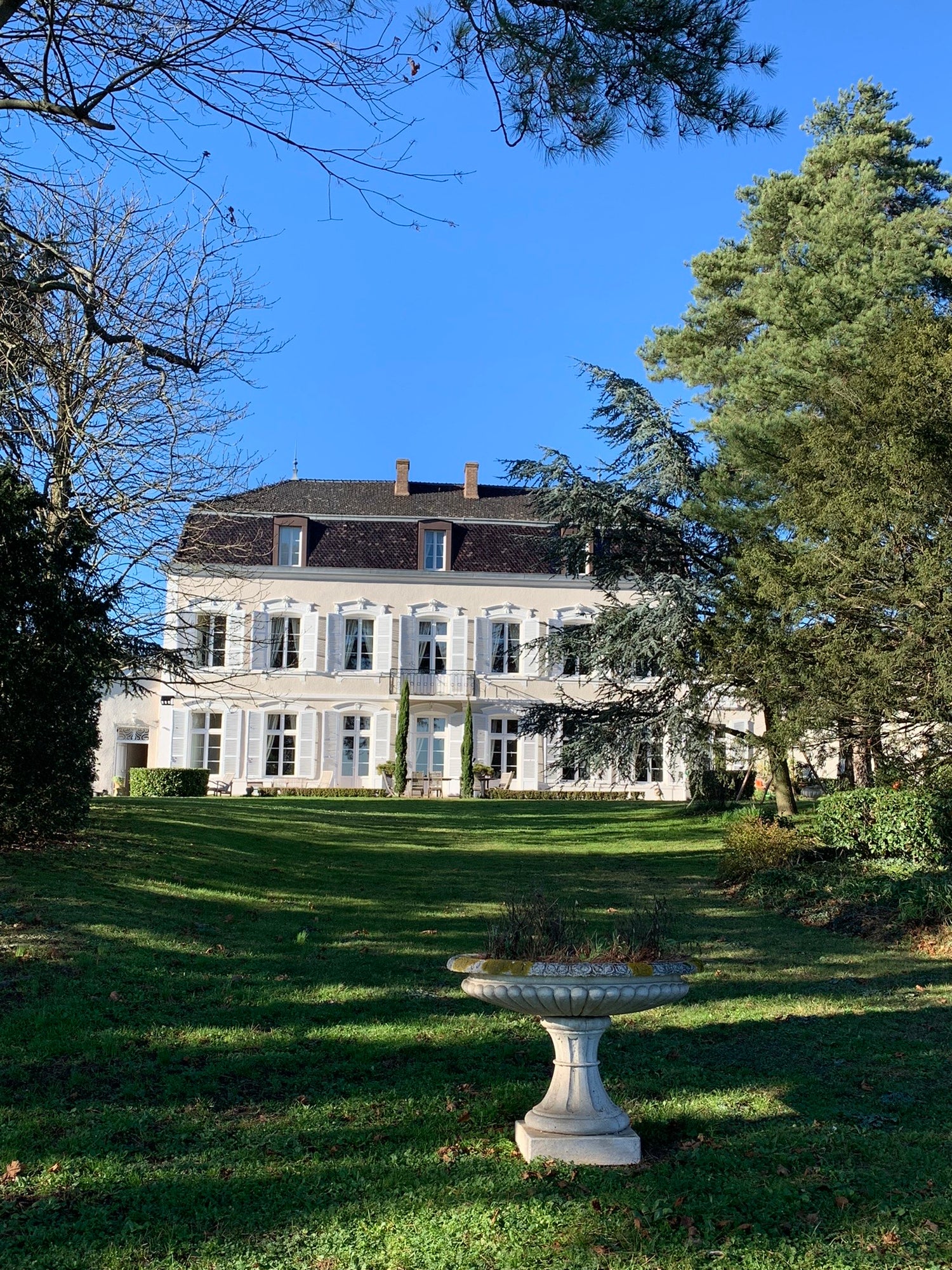
A wine estate rooted in the Chénas appellation
In 1440
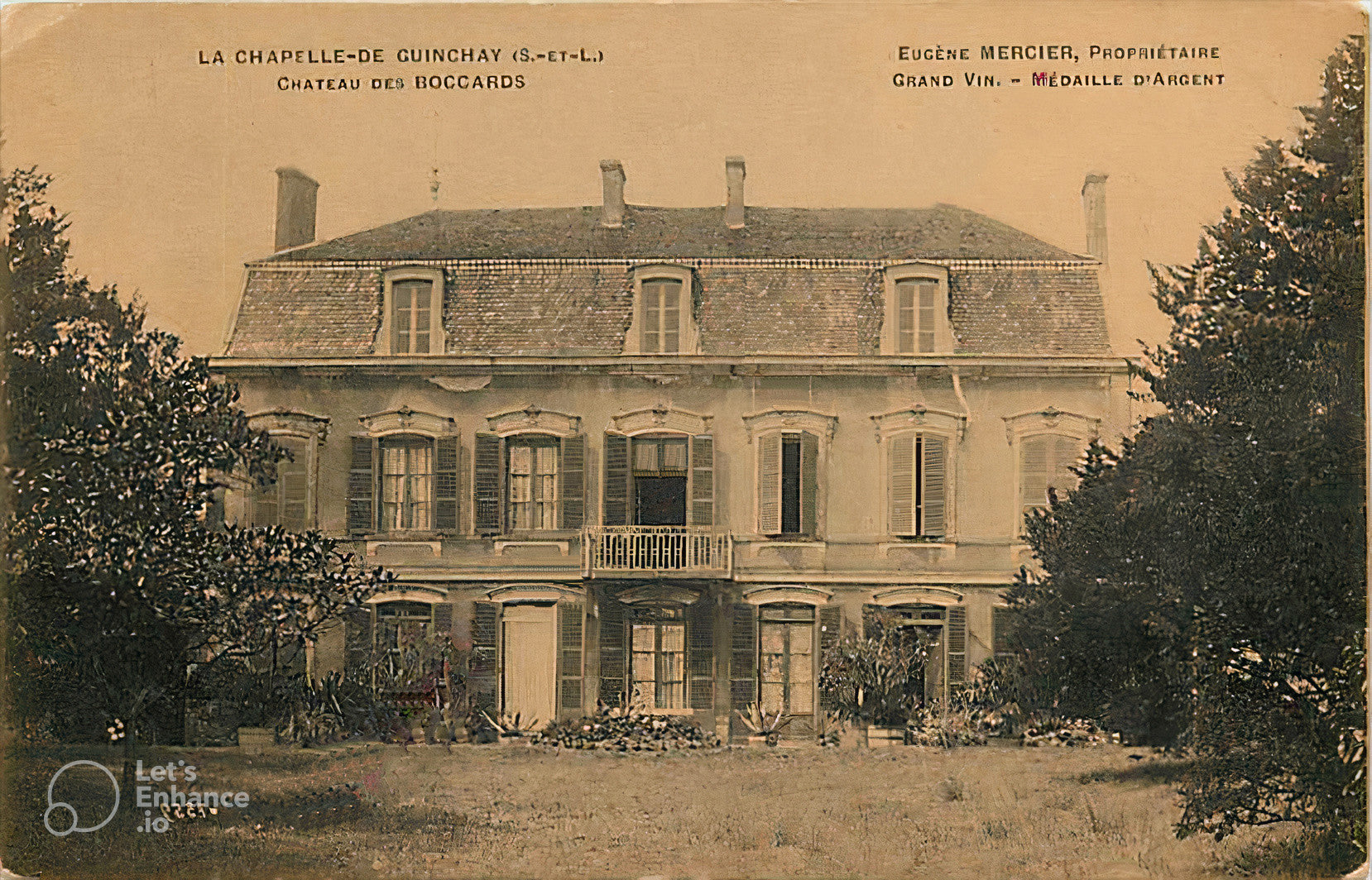
Château des Boccards owes its name to the small hamlet built on the highest point of the main hillside of the vineyards of La Chapelle de Guinchay.
The hamlet takes its name from a Boccard family, several members of which, Hugonin, Barthélémy and Pierre, were in 1440 among the tenants of Geoffroy de Germolles, knight, lord of Banans.
Master Philippe Boccard, notary in the town of La Chapelle de Guinchay, made his will "in a small room in his buildings called the Boccards'". He named Joseph and Philippe Boccard, his two sons, as his universal heirs.
In 1845
The Boccards estate, comprising twelve vineyards, belonged to Louis Trichard, a wine merchant, whose son sold it in 1851 to Monsieur Hubert Orta of Lyon. Passed down to his sons, the estate was put up for sale in 1891 and awarded to Monsieur Dubost.
From the beginning of the 20th century until 1977
The Château des Boccards was successively owned by the Mercier and Lachat families.
Today
The Château des Boccards is owned by the Pelloux family, who are committed to preserving the work initiated in the vineyard and the cellar to offer wines to be enjoyed on all occasions, under the appellations Chénas "En Papolet" (red) and Beaujolais (rosé and white).
Vines cultivated with passion
The vineyard extends over predominantly granitic soil and possesses all the characteristics necessary to produce an exceptional and rare product.
The soils are thin, light, acidic, formed in place by the decomposition of igneous rocks.
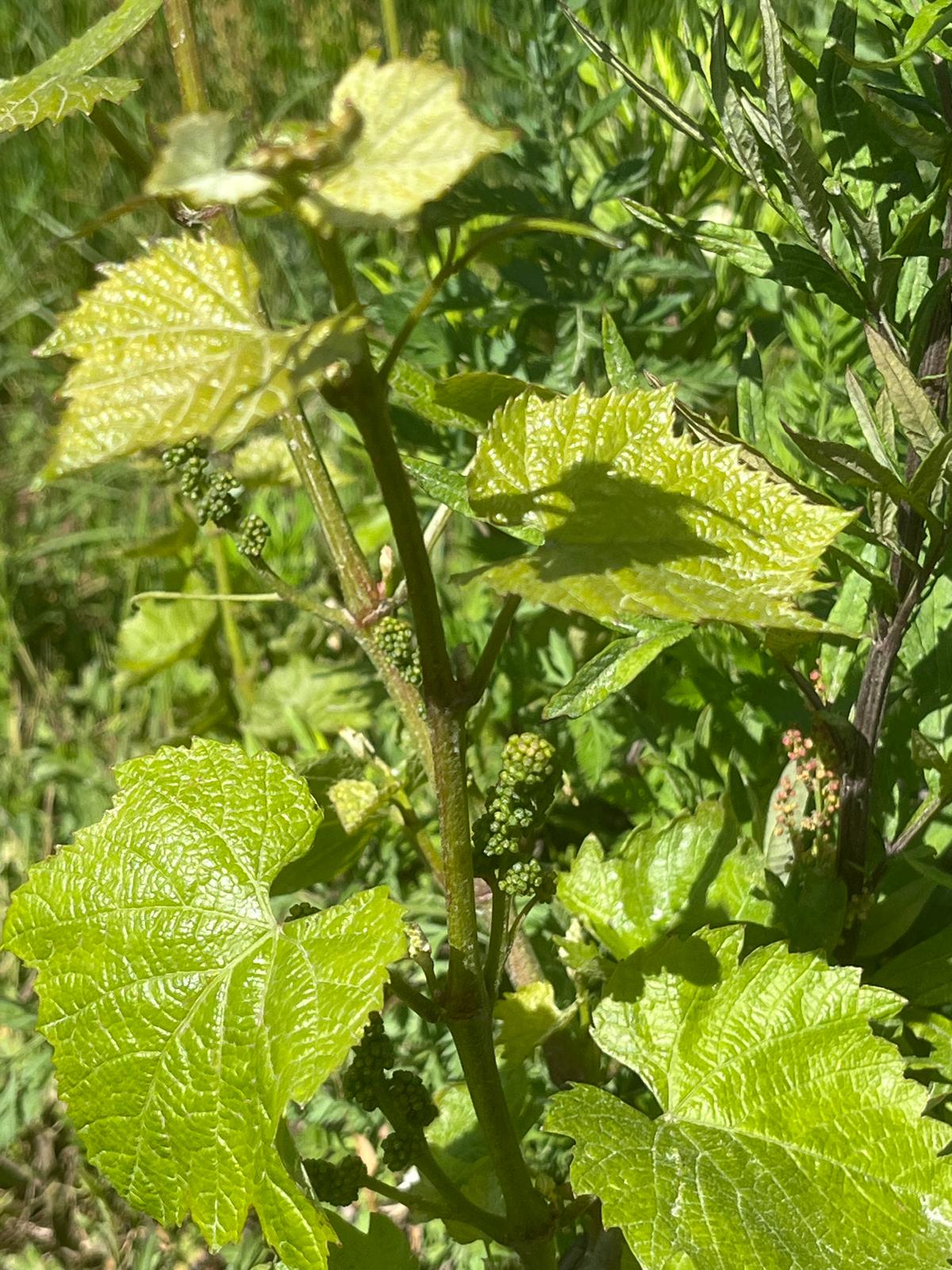
The Château des Boccards vineyard is planted exclusively with the Gamay Noir à Jus Blanc grape variety and has been cultivated according to organic farming standards since 1995 (the date of certification). However, aware of evolving tastes in wine consumption in France and abroad, the Pelloux family has decided to plant Chardonnay to produce Beaujolais Blanc , the first vintage of which will be available in spring 2025.
The winemaking process used is traditional :
- The grapes are, in part, poured intact into the vat, in order to retain the maximum aromas and preserve the fruitiness of the berries.
- The fermentation time is 6 to 12 days depending on the vintage and the age of the vine.
- At pressing, the free-run wines, giving finesse and fruitiness, come out, blended with the press wines, bringing body and tannins, essential for the balance and good aging of the wine.
This Chénas "En Papolet" appellation, from granitic soils, is characterized by remarkable qualities of finesse, fruitiness, and an aptitude for aging.
Over the years, this wine has acquired the generous charm of a Beaujolais and the fullness of a Burgundy.